
Most people place rubbish in a bin and rarely think about what happens next. Once waste is collected, it begins a structured journey through Perth’s waste management system. Depending on the type of material, it may be sorted, recycled, recovered for energy, or sent to landfill.
Understanding where your waste goes helps explain why sorting rubbish correctly is so important. Items such as metals, cardboard, and certain plastics can often be recycled and turned into new materials, while others require specialised disposal methods.
Some waste streams also need special handling. For example, items like electronics contain valuable materials that can be recovered but also harmful components that must be processed safely. Our guide to recycling electronic waste explains how these items are managed properly.
Other materials, such as packaging foam, can be confusing to dispose of. If you are unsure what to do with them, our article on how to recycle styrofoam and polystyrene explains the correct recycling options.
Many people are surprised to learn that recycling systems are often misunderstood. Our guide to recycling myths about what happens to your waste explains some of the most common misconceptions about waste disposal and recycling.
By understanding how waste moves through the system, you can make better decisions about how to dispose of rubbish responsibly.
Waste collection and transport
Once rubbish is placed in a bin or skip, it is collected by waste trucks and transported to a local waste transfer station or sorting facility. These facilities act as central hubs where waste is consolidated before being processed further.
At this stage, the waste is often separated based on type. For example:
-
General waste
-
Mixed construction waste
-
Green waste
-
Recyclable materials
Transfer stations allow operators to sort materials efficiently before sending them to recycling facilities, composting centres, or landfill.
Large clean-ups, home renovations, and landscaping projects often produce a mixture of waste types. Using a skip bin allows these materials to be transported in bulk to facilities where sorting and recycling can occur more effectively.
If your project includes garden waste, our guide to green waste disposal explains how these materials are typically processed.
Sorting and recycling facilities
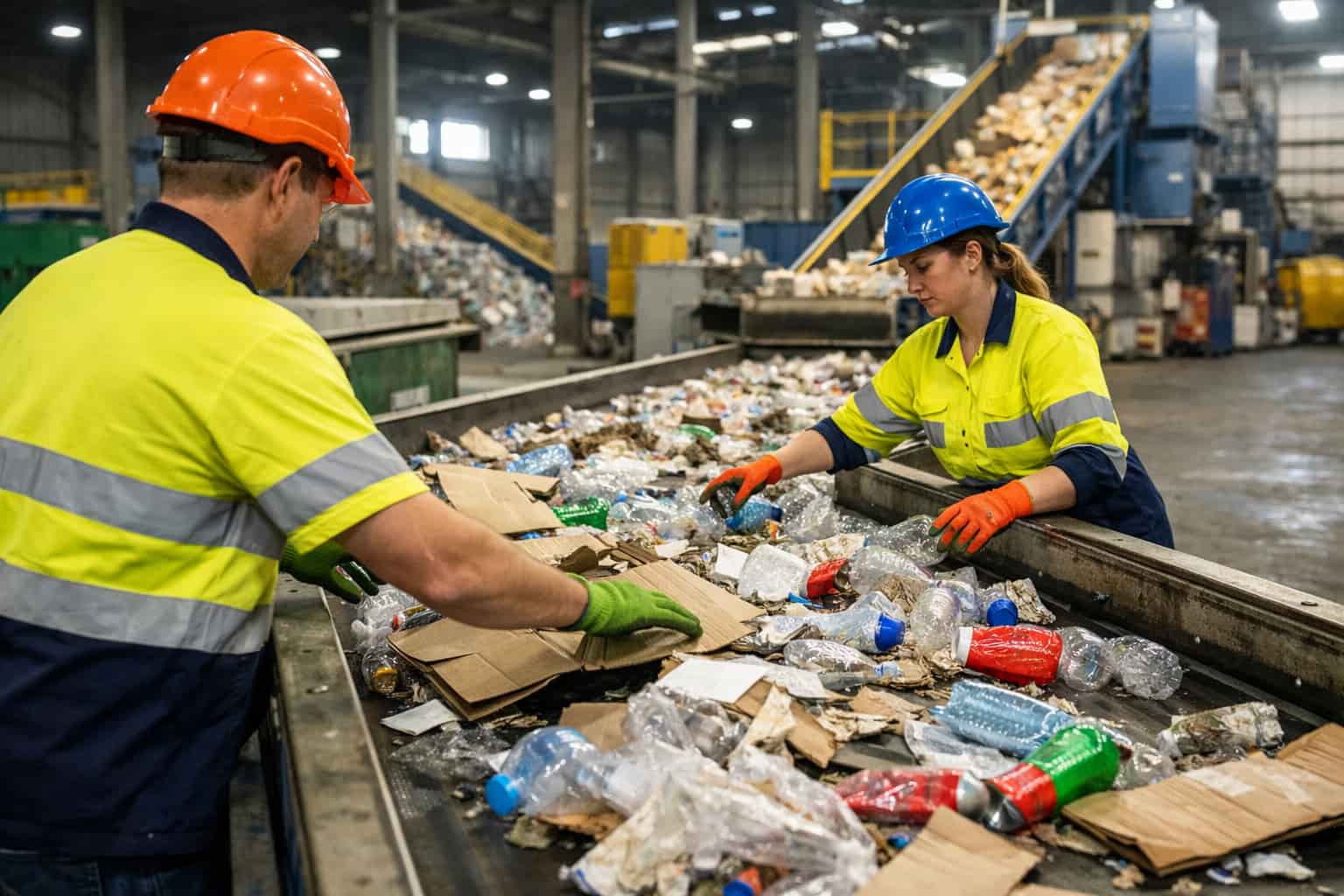
After arriving at a processing facility, recyclable materials are separated using a combination of machinery and manual sorting.
Modern recycling plants may use:
-
Conveyor belts for sorting materials
-
Magnets to remove steel and metals
-
Air separators to isolate lightweight materials
-
Optical scanners that identify different plastics
Once sorted, these materials are processed and prepared for manufacturing. For example:
-
Paper and cardboard are pulped and turned into new packaging
-
Metals are melted and reused in manufacturing
-
Glass is crushed and reformed into new products
However, not all items placed in recycling systems can actually be processed. Contamination, incorrect disposal, and mixed materials can cause recyclable loads to be rejected.
Specialised recycling streams exist for certain materials. Electronics, for example, contain metals, plastics, and circuit components that require dedicated processing facilities. If you are unsure how to dispose of these items, our guide to recycling electronic waste explains how they should be handled.
Similarly, packaging materials such as foam often require specific recycling pathways. Our article on how to recycle styrofoam and polystyrene explains the best disposal options.
Where Perth’s rubbish actually goes after sorting
Once waste has been separated at a transfer station or recycling facility, it does not all go to the same place. Different materials are transported to specialised facilities across Western Australia depending on how they can be processed.
In Perth, rubbish typically follows several different pathways.
Recycling facilities
Materials such as cardboard, paper, metals, and certain plastics are transported to recycling plants where they are processed into raw materials. These materials can then be reused to manufacture new packaging, construction products, or consumer goods.
Green waste processing
Garden waste such as branches, leaves, and grass clippings is usually taken to composting or mulching facilities. Here, the organic material is broken down and turned into compost or mulch that can be used in landscaping and agriculture.
Construction and demolition recycling
Waste from building projects, including concrete, bricks, tiles, and rubble, can often be crushed and reused as road base or construction fill. Recycling these materials helps reduce the need for new raw resources and limits how much waste is sent to landfill.
Understanding these pathways shows why correct waste separation matters. When rubbish is sorted properly, more materials can be recovered and reused instead of being sent to landfill.
What happens when rubbish goes to landfill
Despite advances in recycling, some waste cannot be reused or processed. When this occurs, the remaining material is transported to landfill.
Modern landfill facilities are carefully engineered to minimise environmental impact. Waste is spread in layers and compacted using specialised equipment to maximise space and improve stability.
To protect surrounding environments, landfills include systems such as:
-
Protective liners that prevent contamination from entering the soil
-
Leachate collection systems that capture and treat liquid produced during decomposition
-
Gas capture systems that collect methane produced by breaking waste
In some cases, captured landfill gas can be used to generate energy.
Landfill remains the final step in waste management when recycling or recovery is not possible. If you want to understand the process in more detail, our guide on what happens when rubbish goes to landfill explains how landfill sites operate.
Why responsible waste disposal matters
The journey of rubbish does not end when a bin is collected. Every item moves through a series of facilities that determine whether it can be recycled, reused, or sent to landfill.
Sorting waste correctly helps recycling systems work more efficiently and reduces the amount of rubbish that ends up buried in landfill. It also protects the environment by allowing valuable materials to be recovered and reused.
For larger clean-ups, renovations, or garden projects, using a skip bin can make waste disposal far more organised. Materials can be collected in one place and transported to the appropriate facility for processing.
Making informed decisions about waste disposal helps keep Perth cleaner and supports a more sustainable waste system for the future.

Backyard Bins Team
“ [rcblock id="2165"]”