
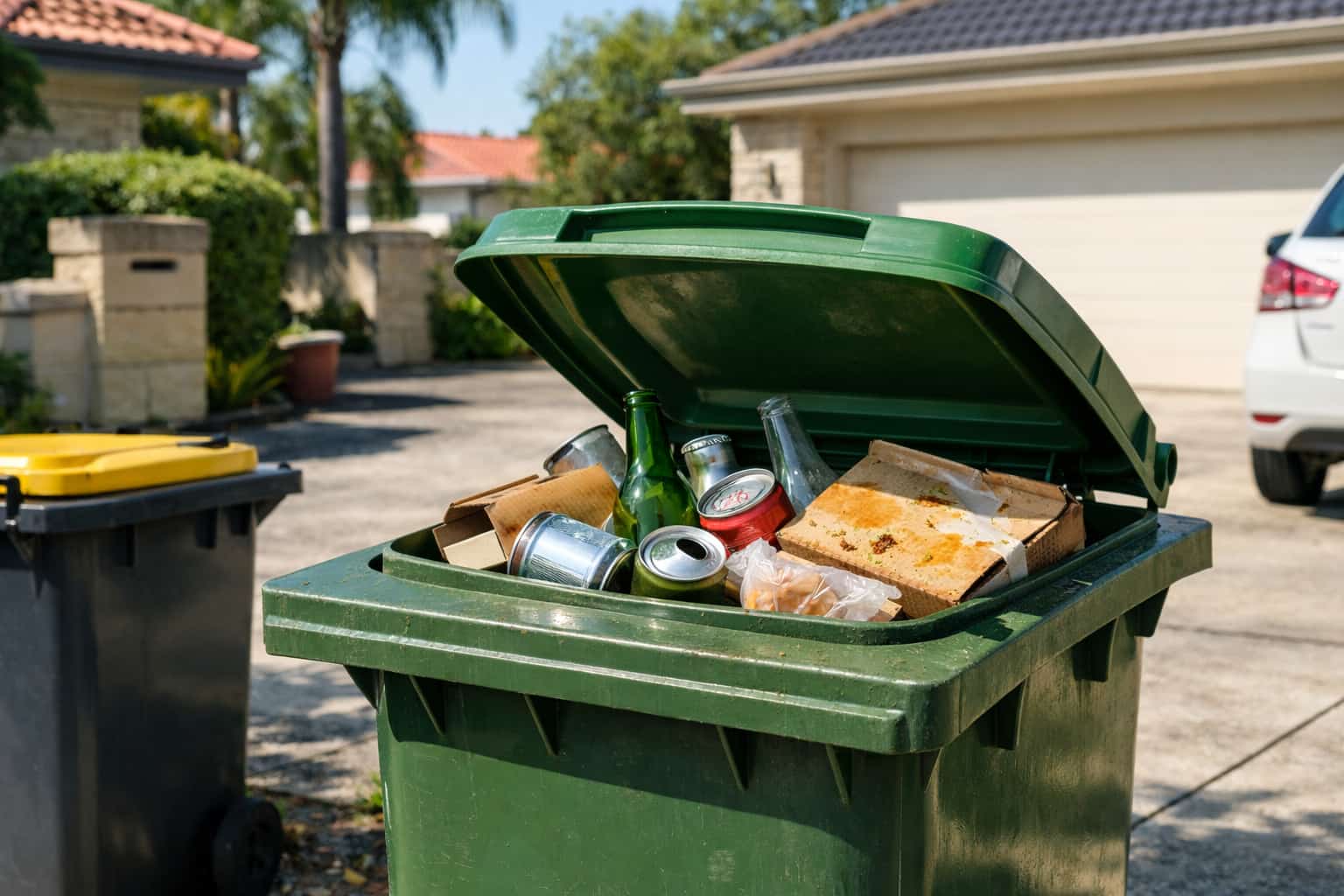
Most households in Perth are trying to recycle properly. We see people rinsing containers, sorting their waste, and choosing products that look more environmentally friendly. The intention is there, but the information people rely on is often unclear, outdated, or not suited to local recycling systems.
That is where recycling myths start to cause problems. Well-meaning habits can unintentionally lead to recyclable materials being rejected, downgraded, or sent to landfill. In many cases, people are putting in extra effort without getting the environmental outcome they expect.
At Backyard Bins, we handle waste every day across Perth. We see what arrives at recycling facilities, what can be processed, and what cannot. This gives us a clear picture of how common recycling misunderstandings affect what actually happens to household waste once it leaves the driveway.
Why recycling is more complicated than it seems
Recycling is often presented as simple. Put the right item in the right bin and it will be recycled. In reality, recycling systems are far more sensitive than most people realise.
A single incorrect item can contaminate an entire batch of recycling. Food residue, mixed materials, and non-accepted products can all cause recyclable waste to be rejected. When that happens, otherwise recyclable items may end up in landfill instead, as explained in our guide on what happens to rubbish in landfill.
This is not because people are careless. It usually comes down to confusing labels, mixed messaging, and the assumption that recycling rules are the same everywhere. What works in one council area may not apply in another, and what looks recyclable on the packaging may not be recyclable locally.
Rest assured that recycling effectively is not about being perfect. It is about understanding how local systems work and avoiding the most common mistakes. Once those myths are cleared up, recycling becomes simpler, more effective, and far less frustrating.
The most common recycling myths households believe
Recycling myths usually start with good intentions. Most people want to do the right thing, but unclear labels, mixed advice, and changes in local rules make it easy to get caught out. Below are the most common misunderstandings we see and what actually happens when they occur.
Myth 1: If it has a recycling symbol, it can go in the recycling bin
This is one of the most widespread recycling myths.
The recycling symbol on packaging does not mean the item will be accepted in your local recycling system. It simply identifies the type of material the product is made from. Whether that material can actually be recycled depends on local facilities, processing capability, and contamination risk.
In Perth, some plastics and composite materials are technically recyclable but not processed locally. When these items are placed in the recycling bin, they often cause sorting issues or are removed and sent to landfill.
This myth leads many households to unknowingly contaminate their recycling. Instead of improving recycling outcomes, it can reduce the amount of material that is successfully recycled. Our essential recycling tips explain how to identify what is actually accepted locally, rather than relying on packaging symbols.
Myth 2: Recycling does not need to be clean
Many people assume recycling facilities wash items as part of the process. In reality, recycling systems are designed to sort materials, not clean them.
Food residue and liquid contamination are major problems. Greasy pizza boxes, half-full drink containers, and food-soiled packaging can quickly contaminate paper and cardboard. Once contaminated, these materials often cannot be recycled at all.
What surprises most households is that one dirty item can affect many clean ones. When contamination spreads through a load, otherwise recyclable materials may be rejected.
A quick rinse and emptying containers properly makes a real difference. It helps protect clean recyclables and improves the chances of successful processing.
Myth 3: All glass is recycled the same way
Glass causes a lot of confusion.
Drink bottles and jars are designed to be recycled through standard glass recycling streams. Other types of glass are not. Items such as window glass, mirrors, ceramics, and tempered glass have different melting points and chemical treatments.
When these materials are mixed with recyclable glass, they can damage recycling processes and reduce the quality of recycled glass. As a result, contaminated glass loads are often rejected.
Broken glass also needs special consideration. Even when recyclable, it must be handled safely and disposed of correctly, which we explain in our guide on proper disposal of broken glass in Australia.
Myth 4: Recycling rules are the same everywhere
Recycling rules vary more than most people expect.
What is accepted in one council area may not be accepted in another. Processing facilities differ, contracts change, and recycling standards are updated over time. Advice that was correct a few years ago may no longer apply today.
This is why relying on general online advice can be misleading. Local guidance is always the safest option, particularly when disposal requirements are shaped by bin laws in Western Australia.
Why these myths stop recycling from working properly
Recycling myths are not just small misunderstandings. When they are repeated across thousands of households, they start to undermine the entire recycling process. What looks like a minor mistake at home can have a much bigger impact once waste reaches sorting and processing facilities.
Contamination turns recyclable materials into landfill
When non-accepted items, food residue, or mixed materials enter the recycling stream, they reduce the quality of the entire load. Recycling facilities rely on clean, consistent materials to process waste efficiently.
When contamination levels are too high, loads may be downgraded or rejected altogether. This often happens when people are unsure about the difference between compost, recyclables and rubbish and place items in the wrong bin.
Wish recycling creates more waste, not less
Wish recycling happens when people place items in the recycling bin hoping they will be accepted, even if they are unsure.
While understandable, this habit causes real problems. Recycling facilities cannot take risks with unknown materials. When loads contain too many questionable items, the safest option is often to divert them away from recycling entirely.
In these cases, guessing does more harm than placing the item in general waste.
Mixed materials are harder to recycle than they look
Packaging made from multiple materials is particularly difficult to recycle. Items combining plastic, foil, cardboard, or coatings are hard to separate and often cannot be processed locally.
Even if these items look recyclable, they can slow down sorting systems and increase rejection rates when placed in recycling bins.
Good intentions do not always lead to good outcomes
Most recycling mistakes are made by people who care. The issue is not effort, but clarity.
When myths guide recycling behaviour, people may spend more time sorting waste without improving recycling outcomes. Clearing up these misunderstandings helps ensure that the effort people put in actually makes a difference.
How to recycle more effectively without overthinking it
Recycling properly does not need to be complicated. Once the most common myths are cleared up, the process becomes much simpler and far less stressful.
Focus on quality, not quantity
A smaller amount of clean, correctly sorted recycling is far more valuable than a larger amount contaminated by food or non-accepted items.
If an item is heavily soiled, made from mixed materials, or not clearly accepted locally, it is often better placed in general waste.
Use local guidance instead of packaging labels
Packaging labels and recycling symbols rarely reflect what can be recycled locally.
Following local advice and focusing on practical habits makes a bigger difference than relying on marketing claims. Reducing overall waste at home also plays a key role, which we cover in our guide on how to reduce household waste.
Keep recycling clean and simple
Simple habits make a big difference:
-
Empty containers fully
-
Rinse bottles, jars, and cans
-
Keep food waste out of recycling
-
Avoid mixing waste types
-
Separate recyclables from general rubbish
These steps help protect recycling streams and improve success rates.
Understand that landfill is sometimes the better option
It can feel wrong to place something in general waste when you want to recycle it. However, protecting the recycling stream is important.
Placing the wrong item into recycling can cause more harm than sending that item to landfill. When unsure, general waste is often the safer choice.
Why local experience matters
Recycling works best when it reflects local conditions. Facilities, processes, and accepted materials vary, and understanding those differences helps avoid mistakes.
At Backyard Bins, we deal with waste every day across Perth. We see what works, what causes problems, and where confusion commonly arises. That hands-on experience allows us to give clear, practical advice based on what actually happens to waste after it is collected.
We are always willing to be on the phone and discuss matters with you. If you are unsure about how to dispose of something, asking first can save effort and help ensure waste is handled in a clean and green way.

Backyard Bins Team
“ [rcblock id="2165"]”