
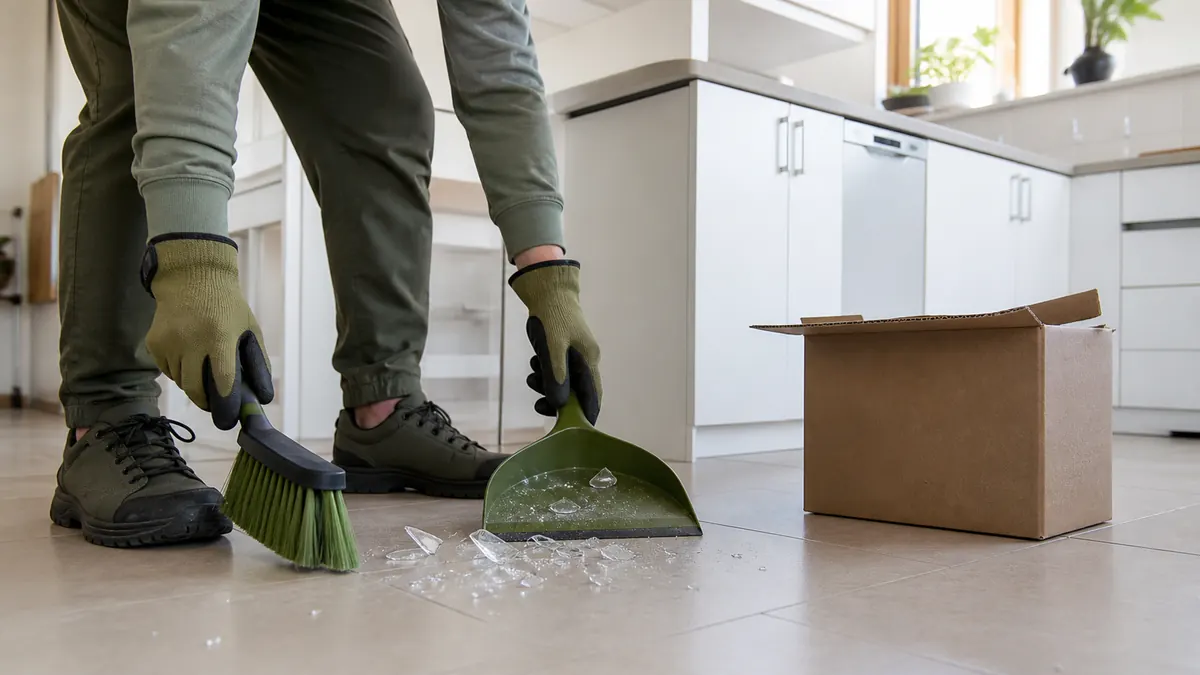
The correct way to dispose of broken glass depends on the type of glass and your local council’s rules. Broken bottles and jars may be accepted in kerbside recycling, while drinking glasses, Pyrex, mirrors, window glass, ceramics and light globes usually require a different disposal method.
Always identify the glass before choosing a bin. If broken glass forms part of a renovation, rental clean-up or larger household project, confirm the type and quantity with Backyard Bins before placing any glass in a skip bin.
Do not treat every glass item like a bottle or jar. Check your council’s current A–Z waste guide, contain sharp pieces safely and use a specialist or transfer facility for large panes, mirrors, shower screens or regulated lighting waste when required.
Quick summary
- Check your local council’s rules before using a kerbside recycling bin.
- Broken glass bottles and jars are different from drinking glasses, Pyrex and plate glass.
- Wear enclosed shoes and suitable gloves, and keep children and pets away.
- Contain non-recyclable shards securely according to the disposal service’s instructions.
- Broken compact fluorescent lamps need special clean-up and disposal steps.
- Confirm any glass with Backyard Bins before placing it in a skip bin.
How to dispose of different types of broken glass
Glass products can have different compositions, coatings and melting temperatures. That is why a broken bottle may be handled differently from a drinking glass, oven dish, mirror or windowpane.
| Glass type | Typical disposal path |
|---|---|
| Glass bottles and jars | Kerbside recycling may accept these, including broken container glass |
| Drinking glasses, vases and opaque glass | Usually general waste or a facility—not container-glass recycling |
| Pyrex and other heat-resistant glass | Usually general waste or a nominated facility |
| Ceramics, china and crockery | General waste or a nominated facility |
| Mirrors, windows and plate glass | Transfer facility, specialist service or another council-approved option |
| Light globes and fluorescent lamps | Dedicated globe or hazardous-waste service where available |
| Medical or contaminated glass | Appropriate specialist disposal service |
Local rules genuinely differ. City of Cockburn’s current A–Z guide places broken glass in the recycling bin, and City of Melville accepts broken glass bottles and jars. Other glass types follow different paths, so check your own council before disposal.
Glass bottles and jars
Container glass such as food jars and beverage bottles is commonly collected for recycling. Some Perth councils accept broken container glass in the recycling bin, but the glass should still meet the council’s rules for container glass.
Check your council’s guide or the WA Recycle Right A–Z directory. For local examples, see the City of Cockburn A–Z waste guide and City of Melville recycling guidance.
Do not wrap recyclable glass unless your council tells you to. Packaging glass in bags, paper or boxes may conflict with local recycling instructions. Follow the receiving service’s directions.
Drinking glasses, Pyrex and household glassware
Drinking glasses, Pyrex, ovenware, vases, white opaque glass, ceramics and china should not automatically go into container-glass recycling. If your council directs these items to general waste, contain broken pieces securely using its recommended method so sharp edges cannot protrude.
Light bulbs and fluorescent lamps
Broken compact fluorescent lamps need different handling. They can contain a small amount of mercury. Keep children away, ventilate the area, avoid bare-hand contact and do not vacuum the initial debris.
HealthyWA recommends using stiff paper or cardboard to collect broken CFL material, using sticky tape or a damp cloth for remaining fragments, and sealing the clean-up material. Read the current HealthyWA guidance for broken compact fluorescent lamps before cleaning one up.
How to clean up broken glass safely
The first priority is preventing cuts and keeping shards contained. For ordinary household glass:
- Keep children, pets and other people away from the area.
- Wear enclosed shoes and suitable protective gloves.
- Pick up larger pieces carefully without applying pressure to sharp edges.
- Use a brush and dustpan for small shards rather than your hands.
- Check nearby edges, mats and furniture for fragments.
- Contain non-recyclable shards so they cannot protrude or escape.
- Follow the receiving council, facility or waste provider’s packaging instructions.
Do not leave loose shards in bags, boxes, bins, driveways or work areas. A container that tears or opens can expose everyone who handles the waste later.
How to dispose of windows, mirrors and shower screens
Large panes, mirrors and shower screens are harder to handle because of their size, weight and breakage pattern. Once damaged, they can create long sharp edges and small fragments that are difficult to contain.
Consider professional removal or a transfer facility for large or installed glass. City of Cockburn, for example, directs plate glass and windowpanes to Henderson Waste Recovery Park rather than kerbside recycling.
Do not break large panes simply to make them fit. Contact the receiving facility or removal provider first and follow its transport and packaging requirements.
Can you put broken glass in a skip bin?
Do not throw loose glass into a Backyard Bins skip bin. Tell the team the type, approximate quantity and source of the glass before booking or loading so they can confirm whether it is accepted and how it must be contained.
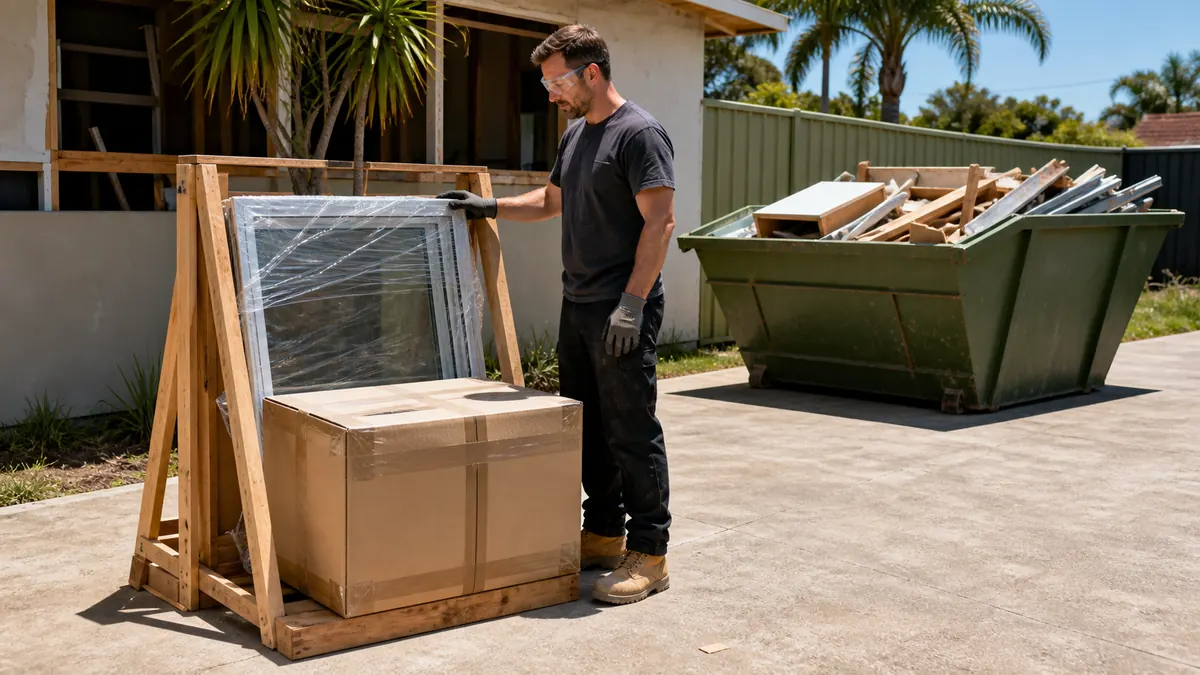
If Backyard Bins confirms a small quantity can be included, wrap and tape the shards securely, place them inside a sturdy closed box and clearly mark it as broken glass. Keep sharp edges contained.
Large quantities, plate glass, windows, mirrors, shower screens, light globes, medical glass or contaminated glass may require a different disposal service. Calling first avoids creating a risk for the people collecting, transporting and sorting the load.
Review what can go in a Backyard Bins skip bin or call (08) 9437 3733 for a clear answer about the job.
What if the glass is part of a bigger clean-up?
A single broken drinking glass does not call for a skip bin. A renovation, rental clean-up, deceased estate, garage clear-out or major household project may produce glass alongside much larger quantities of accepted waste.
Backyard Bins uses different categories for General Light Waste, Mixed Renovation/Construction Waste, Clean Heavy Waste and Soil Only. The correct option depends on every material going into the bin—not only the glass.
| Clean-up materials | Next step |
|---|---|
| Household junk, furniture, cardboard, plastics and metals | Check General Light Waste |
| Timber, cabinetry, gyprock, tiles and mixed renovation material | Check Mixed Renovation/Construction Waste |
| Soil, sand, bricks, concrete or tiles only | Check Clean Heavy Waste |
| Soil or sand only | Check Soil Only |
| Any glass, restricted item or uncertain material | Call before loading |
Compare the current skip bin sizes, prices and waste categories, use the bin size tool, or contact Backyard Bins before booking.
FAQs about broken glass disposal
Can broken glass go in the recycling bin?
Some councils accept broken container glass such as bottles and jars in kerbside recycling. Other glass types may not be accepted. Check your local council’s current A–Z waste guide before using the recycling bin.
Can drinking glasses and Pyrex be recycled with bottles?
Usually not. Drinking glasses, Pyrex and ovenware have different properties from glass bottles and jars and commonly go to general waste or another council-approved service.
How should sharp glass be packaged?
Follow the receiving service’s instructions. Non-recyclable shards should be secured so they cannot protrude or escape. Do not wrap glass going into recycling unless the council specifically instructs you to.
Can broken glass go into a Backyard Bins skip bin?
Only after confirming the type and quantity with Backyard Bins. Never place loose glass in a skip bin. If accepted, it must be securely contained according to the team’s instructions.
What should I do with a broken fluorescent globe?
Keep people away, ventilate the area and follow HealthyWA’s specific CFL clean-up guidance. Do not handle the initial debris with bare hands or vacuum it immediately.
Where can I dispose of window glass or a mirror?
Plate glass, mirrors, windows and shower screens may need a transfer facility, specialist service or other council-approved option. Check your local guide and contact the facility before transporting large glass.
Planning a larger clean-up?
Backyard Bins services most suburbs south of the river. Tell Lisa and the team about every material in the load—including the type and quantity of glass—so the correct bin and containment method can be confirmed.

Lisa Seale
“ [rcblock id="4065"]”