
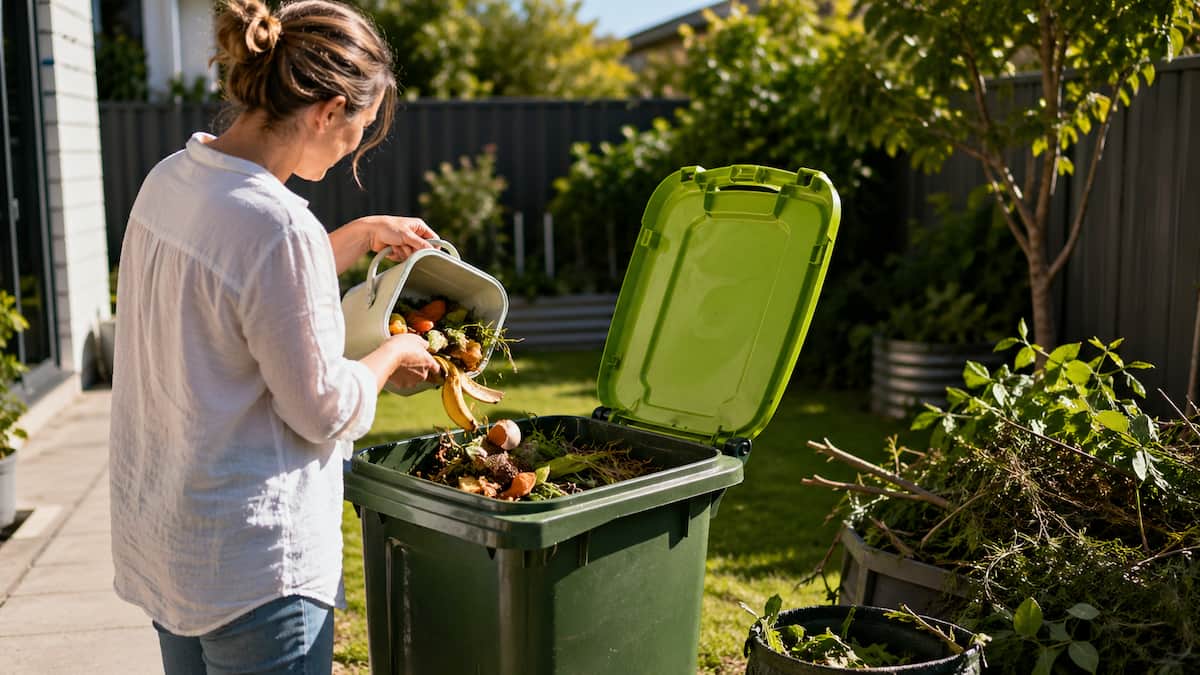
What is FOGO waste? FOGO stands for Food Organics and Garden Organics. It is a system that separates food scraps and garden waste from general rubbish so the material can be processed into compost or other useful organic products instead of being sent to landfill.
If you are trying to reduce household waste, understanding FOGO is a practical place to start. It can help you sort waste more accurately, keep more organic material out of landfill, and make better decisions about what belongs in your kerbside bin and what needs another disposal option.
Quick Summary
- FOGO stands for Food Organics and Garden Organics
- It usually includes food scraps and garden waste
- It is different from recycling, general rubbish, and standard green waste
- Some Perth councils use full FOGO systems, while others use different organics collection methods
- Large clean-ups and mixed waste jobs may still be better suited to a skip bin than kerbside collection
This topic can sound more complicated than it really is. In simple terms, if the waste came from food or the garden, there is a good chance it may belong in FOGO, but not always. Packaging, plastics, glass, and other contaminants stay out, and the exact rules can depend on your local council. That is why it helps to understand how FOGO fits alongside compost, recyclables and rubbish before you start filling the bin.
What does FOGO stand for?
FOGO stands for Food Organics and Garden Organics. That means one waste stream is used for food scraps from the kitchen and organic waste from the garden. The goal is to recover material that would otherwise go in the general waste bin and turn it into something more useful, such as compost or soil improvement products.
The term is closely related to two other terms you may also see:
- FO means food organics
- GO means garden organics
- FOGO means both food and garden organics collected together
This matters because not every council handles organics the same way. Some systems accept both food and garden waste together, while others may still focus more on garden-only material. That is one reason people often confuse FOGO with ordinary garden waste collection. If you are unsure where the line sits, our guide to compost, recyclables and rubbish can help make the difference clearer.
For households, the easiest way to think about FOGO is this: it is for organic waste that used to be alive, provided it is accepted by your local collection system. That includes common kitchen scraps and many garden materials, but it does not mean every natural-looking item can go in.
What goes in a FOGO bin?
In most FOGO systems, the bin is designed for everyday organic waste from your kitchen and garden. That includes a much wider range of material than many people expect.
Food waste that usually goes in
Most FOGO systems accept a broad mix of food scraps, including:
- fruit and vegetable peels and scraps
- leftovers
- bread and grains
- eggshells
- tea leaves and coffee grounds
- meat and bones
- seafood scraps
- dairy scraps
- unpackaged out-of-date food
This is one of the biggest differences between FOGO and basic backyard composting. Many home compost setups are more limited, while council FOGO systems often accept foods like meat, dairy and seafood that people would not usually put in a home compost bin.
Garden waste that usually goes in
FOGO also covers many common garden materials, such as:
- grass clippings
- leaves
- flowers
- weeds
- plant cuttings
- prunings
- twigs
- small branches
If your waste is mainly from the garden, our guide to types of garden waste can help you work out what you have and the best way to get rid of it.
What about liners and kitchen caddies?
Many FOGO systems use a kitchen caddy with certified compostable liners. A good rule is to use only approved liners for your council area, not ordinary plastic bags or bags that are simply labelled biodegradable.
A lot of contamination starts with the bag, not the food itself. A banana peel in the right liner may be fine. The same banana peel in a plastic shopping bag is not.
A simple rule of thumb
A helpful way to think about FOGO is this: if it did not grow, or it was not alive, it usually does not belong in the FOGO bin. It is not a perfect test for every council, but it is a useful starting point for everyday household sorting.
If you have waste that falls outside organics collection, especially after a clean-up, renovation, or larger yard job, it helps to know what can I put in a skip bin so you choose the right disposal option from the start.
What cannot go in FOGO waste?
Knowing what stays out is just as important as knowing what goes in. FOGO loads can be spoiled by contamination, which means the wrong items can reduce the quality of the final composted product or stop the material being processed properly.
Common items that stay out
As a general rule, these items should not go in FOGO:
- plastic bags
- glass
- metal
- nappies
- general packaging
- anything non-organic
- non-approved compostable or biodegradable bags
This is where people often get caught out. Something may look harmless or even sound environmentally friendly, but that does not mean it belongs in the organics stream.
Why contamination matters
FOGO only works well when the material is sorted properly. Once plastics, glass or other contaminants are mixed through organic waste, the whole process becomes harder. That is why councils and waste processors put so much emphasis on clear sorting rules, approved liners and simple education.
A lot of household confusion comes from mixed messaging around recycling, composting and kerbside bins. Our article on recycling myths is a useful follow-on if you want to clear up some of the most common sorting mistakes.
If you are dealing with items that clearly do not belong in organics collection, this guide on what can I put in a skip bin will help you work out a more suitable disposal path.
FOGO vs green waste vs general waste
One of the biggest reasons people search this topic is simple confusion. FOGO, green waste and general waste all sound similar, but they are not the same thing. Understanding the difference can help you avoid contamination, use the right bin, and choose a better disposal option when your kerbside service is not enough.
FOGO waste
FOGO means Food Organics and Garden Organics. It combines food scraps from the kitchen with organic material from the garden in one collection stream.
Green waste
Green waste usually refers to garden-only material. Think lawn clippings, leaves, branches, weeds, prunings and other plant matter from outside. FOGO goes a step further because it includes food waste as well.
If your waste is mostly from yard work, pruning or a seasonal clean-up, our green waste guide can help you work out the best disposal method.
General waste
General waste is the material that cannot go in your recycling bin or organics bin. This may include contaminated items, mixed rubbish, non-recyclables, certain packaging, broken household items, and anything else your local system does not accept through separate waste streams.
For larger clean-ups, moving house, or mixed rubbish jobs, kerbside bins often are not enough. In that case, our domestic waste skip bin options may be more practical.
The simplest way to think about it
A practical way to separate these categories is:
- FOGO = food scraps plus garden organics
- Green waste = garden material only
- General waste = the rest that cannot be sorted into organics or recycling
If you are still unsure where one waste stream ends and another begins, this guide to compost, recyclables and rubbish breaks it down in a simpler way.
Is FOGO available everywhere in Perth?
Not always.
Across WA, FOGO has become more common as part of the push toward three-bin systems, particularly in Perth and Peel. At the same time, not every council uses the same system. Some councils provide full FOGO collections, while others still use different organics services or garden-only systems.
That means the answer for one Perth suburb may not be the answer for another. A resident in one area may have a weekly FOGO collection with a kitchen caddy, while someone elsewhere may only have access to a garden organics bin, or no organics service at all.
For households, the main takeaway is simple: do not assume the rules are identical across Perth. Check what your own council accepts before throwing food scraps or garden material into the organics bin.
If your local service is limited, or you have more waste than your kerbside bins can handle, you can still arrange skip bin hire in your suburb for larger clean-ups.
What happens to FOGO waste after collection?
Once your FOGO bin is collected, the material is taken to an organics processing facility rather than being treated like ordinary rubbish. From there, it is processed so the organic material can be turned into something useful instead of being buried in landfill.
In many systems, that means composting. In others, it may involve other forms of organics processing. Either way, the goal is the same: recover the material and put it to better use.
If you want to compare this with standard disposal, our article on what happens to rubbish in landfill explains why separating organics matters in the first place.
Why is FOGO waste important?
FOGO matters because food and garden waste make up a large share of what households throw away, and sending that material to landfill creates unnecessary waste. When organic waste breaks down in landfill, it produces methane and other emissions that could often be avoided through better separation and recovery.
Sorting FOGO properly helps in a few key ways:
- it keeps recoverable organic material out of landfill
- it supports composting and other useful recovery outcomes
- it encourages better household waste habits
- it creates a cleaner and more efficient waste system overall
There is also a practical household benefit. Once you start separating organics properly, it becomes easier to see how much of your weekly waste is food and garden material rather than true rubbish.
For waste that cannot go into your FOGO, recycling, or general kerbside system, these rubbish and recycling centres in Perth may offer another useful disposal path.
FOGO waste and home composting: what’s the difference?
FOGO and home composting are related, but they are not the same thing.
Home composting is usually a small-scale system you manage yourself at home. It can be a great option for fruit and vegetable scraps, leaves, grass clippings and other simple organics, especially if you have a garden and want to reuse the compost on site.
FOGO, on the other hand, is a council or waste-service collection system that sends organic material to a processing facility. One of the main advantages is that many FOGO systems can accept items that a home compost setup often cannot handle well, such as meat, bones, dairy and seafood.
That makes FOGO more flexible for many households. If you cook often, generate mixed food scraps, or do not have the space, time or setup for home composting, a FOGO system may be easier to use day to day.
If you are trying to work out where FOGO sits alongside other disposal streams, this guide to compost, recyclables and rubbish is a good companion read.
When a skip bin is a better option than FOGO
FOGO is useful for everyday household organics, but it is not designed for every job. Once the volume gets too large, the waste becomes mixed, or the material falls outside council organics rules, a skip bin can be the more practical option.
A skip bin is often the better fit when you are dealing with:
- a major backyard clean-up
- heavy pruning or landscaping waste
- mixed rubbish from a shed, garage or moving job
- renovation or clean-up waste that cannot go in organics collection
- more waste than your kerbside bins can handle in a week
This is where households can get caught out. A few bags of leaves and food scraps may suit FOGO, but a large weekend clean-up can easily produce more waste than your standard organics bin can take.
If that sounds like your situation, our guide on what size skip bin do I need can help you choose the right bin without paying for more space than you need.
You can also use our bin size tool if you want a faster way to estimate the right size for your job.
If you are still weighing up the options, this comparison of skip bin hire vs rubbish removal services can help you decide what works best for your clean-up.
For bigger outdoor projects in particular, our guide to disposing of landscape waste in Perth is also worth a look.
Common questions about FOGO waste
Is FOGO the same as green waste?
No. Green waste usually refers to garden-only material such as leaves, grass clippings, branches and prunings. FOGO includes that garden material, but it also includes food scraps.
Can cooked food go in FOGO?
In many FOGO systems, yes. Cooked food, leftovers and similar food scraps are often accepted, but your local council rules should always be checked first.
Can meat and bones go in FOGO?
Often yes, but this depends on the collection system used by your local council. Many FOGO systems accept meat, bones and seafood, while some local rules may differ.
Can I use biodegradable bags in my FOGO bin?
Not necessarily. The safest approach is to use only approved compostable liners that are accepted in your local system.
What if my council does not offer FOGO?
If FOGO is not available in your area, you may still have access to another organics system such as a garden-only service, or you may need to look at other disposal methods depending on the type and amount of waste. If your job is mostly outdoor waste, our green waste options may be a better fit.
What should I do with extra garden waste that will not fit in my bin?
If you have more branches, prunings, leaves or clippings than your kerbside service can handle, a larger disposal option may make more sense. Our guide to types of garden waste covers the different kinds of garden waste and how to get rid of them properly.
Can I put everything organic in FOGO?
No. Even if something looks natural, that does not automatically mean it belongs in FOGO. Packaging, plastics, glass, metals, and non-approved bags are common examples of items that should stay out. If you have material that does not belong in organics collection, this guide on what can I put in a skip bin can help point you in the right direction.
So What Is FOGO Waste?
FOGO waste is simply Food Organics and Garden Organics, but knowing what that means in practice can make a real difference to how you sort waste at home. It helps keep food scraps and garden material out of landfill, supports better waste recovery, and gives households a cleaner and greener way to manage everyday organics.
The main thing to remember is that local rules can vary. One Perth household may have access to a full FOGO system, while another may still be working with a different organics setup. That is why it always pays to check your council guidelines before assuming what goes in the bin.
For a broader explanation of WA household organics, see WasteSorted WA’s guide to FOGO. For a wider overview of how FOGO works and why it matters, Veolia’s FOGO explainer is also useful.
And if your clean-up goes beyond what your kerbside bins can handle, whether that is a garden overhaul, a moving job or a larger household clean-out, you can book a skip bin in your area and get the waste sorted properly. As a family-run, local business, we do our best to accommodate all requests, with reliable service, clear advice and a clean and green approach from start to finish.

Backyard Bins Team
“ [rcblock id="2165"]”