
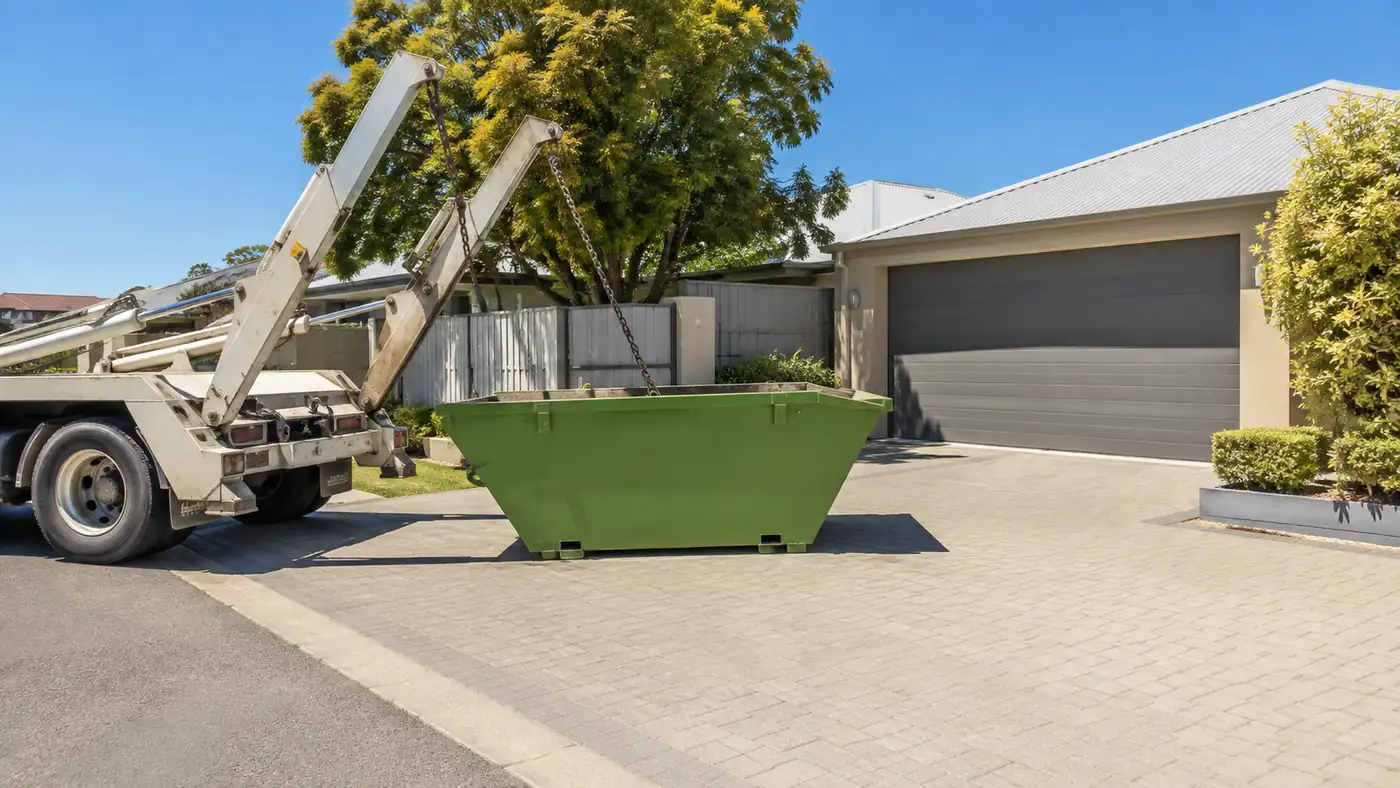
To prepare for skip bin delivery, choose a firm, reasonably level area with clear access from the street. Move vehicles, open gates and check for narrow entrances, soft ground, low branches, powerlines and roof overhangs before the truck arrives.
A few practical checks can prevent delivery delays, protect access to your property and help the driver position the bin where it can also be collected safely at the end of the hire.
Check the complete route—not only the space where the bin will sit. The truck must be able to approach, position, lower the bin and return through the same access route for collection.
Quick delivery checklist
- Choose firm, stable and reasonably level ground on private property where possible.
- Clear the truck route from the street to the requested placement area.
- Move cars, trailers, wheelie bins, building supplies and garden equipment.
- Check above the route for powerlines, branches, carports and roof overhangs.
- Report steep driveways, narrow gates, tight turns and weak surfaces before delivery.
- Keep children and pets away while the truck is onsite.
- Keep the route available for collection at the end of the hire.
How to prepare before booking delivery
Choose the right bin and waste category
Choose the bin according to how much waste you have and what the load contains. A larger bin needs more placement space, while soil, sand, bricks, concrete and tiles require a different waste category from household junk, furniture or green waste.
Compare the current skip bin sizes, prices and waste categories, or use the Backyard Bins bin size tool before booking.
Choose a suitable placement area
The requested placement area should be:
- Firm and stable
- As level as reasonably possible
- Accessible from the street
- Clear above and around the bin
- Practical for loading
- Available again on collection day
A private driveway is often the simplest option. Check its width, slope, surface condition and the access you will still need while the bin is onsite.
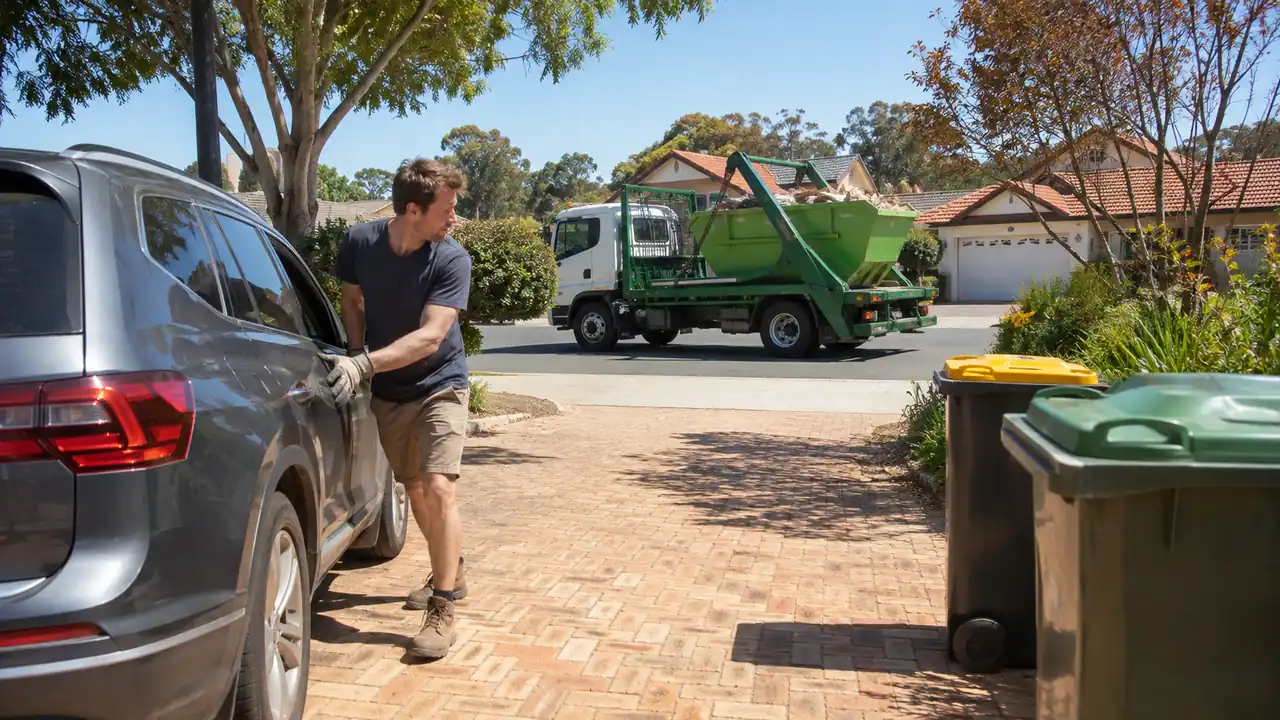
How much truck access is needed?
Backyard Bins generally requires a driveway around 3 metres wide when the truck needs to reverse straight down it. The actual clearance depends on the truck, bin size, gate width, turning space, slope and angle of approach.
Width alone does not confirm that delivery is possible. Walk the route from the street to the placement point and consider whether the truck can approach, position, lower the bin, leave the property and return for collection.
| Area | What to check |
|---|---|
| Street approach | Parked vehicles and room to line up safely |
| Driveway entrance | Gate width, pillars, parked cars and trailers |
| Access route | Narrow sections, sharp turns, slope and temporary fencing |
| Ground | Mud, sand, soft soil, loose paving and damaged concrete |
| Overhead area | Powerlines, cables, branches, carports, balconies and rooflines |
| Collection route | Whether the same route will remain open at the end of the hire |
Clear the route before the truck arrives
Move or report anything that may restrict the route, including:
- Parked cars, trailers, boats or caravans
- Narrow gates and fence pillars
- Sharp turns or steep driveway sections
- Soft, sandy or muddy ground
- Building materials and temporary fencing
- Garden equipment, hoses and wheelie bins
Backyard Bins operates different trucks, including a smaller truck for some less-accessible locations. Tell the team about tight access before delivery so the site and suitable options can be assessed.
Check the space above the route
The truck also needs clear overhead space while positioning and lowering the bin. Look for powerlines, cables, tree branches, carports, balconies, roof eaves, shade sails and scaffolding.
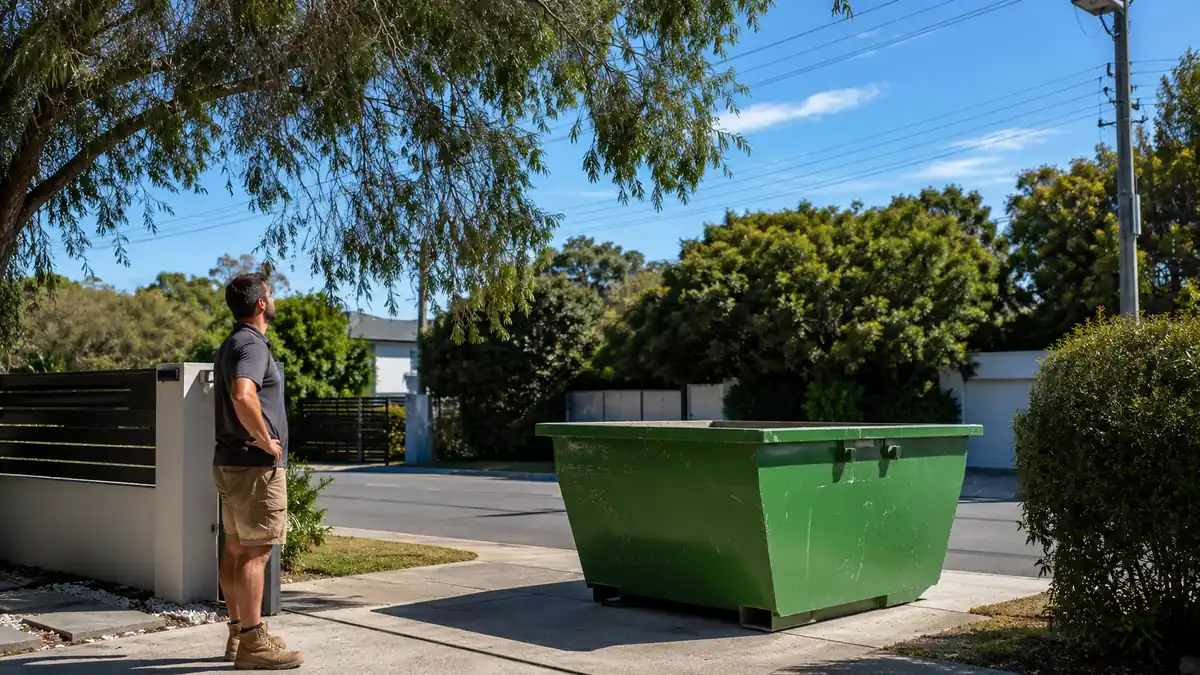
Do not guess around overhead hazards. Contact Backyard Bins before delivery if anything sits above or close to the requested truck route or bin position.
Where should you place the skip bin?
The best location is usually a firm area on private property with a clear route from the street. It should also leave practical access to the home, garage, walkway or work area.
Private driveway
A driveway is often the most straightforward location. Make sure the bin will not block a garage, side gate, shared driveway or vehicle you need during the hire. Check for weak edges, drains and recently installed surfaces.
Grass or soft ground
Grass may not be suitable when the ground is wet, sandy, uneven, recently landscaped or fitted with reticulation. Underground services can also affect the requested position. Speak with Backyard Bins before choosing a lawn or other soft area.
Renovation or building site
Choose a position that will not later be blocked by building supplies, machinery, scaffolding, work vehicles or temporary fencing. Coordinate the location with the builder or site supervisor and keep the collection route available.
Road, verge or shared area
Approval may be required. Do not assume a bin can be placed outside the property boundary or in a shared area without permission.
Local rules can apply to roads, verges, footpaths, public parking areas and shared property. Read the current guide to placing skip bins on the road or verge in Perth and check the requirements with the relevant council or property manager.
For additional examples, see the Backyard Bins placement guide.
How to protect your driveway or lawn
Inspect the surface before delivery and tell Backyard Bins about existing damage or areas that may not support the bin and truck safely.
Look for:
- Cracks and weak concrete edges
- Loose, lifted or sunken pavers
- Soft asphalt
- Drain and utility covers
- Irrigation equipment and reticulation
- Soft soil, sand or recently landscaped ground
- New concrete or paving
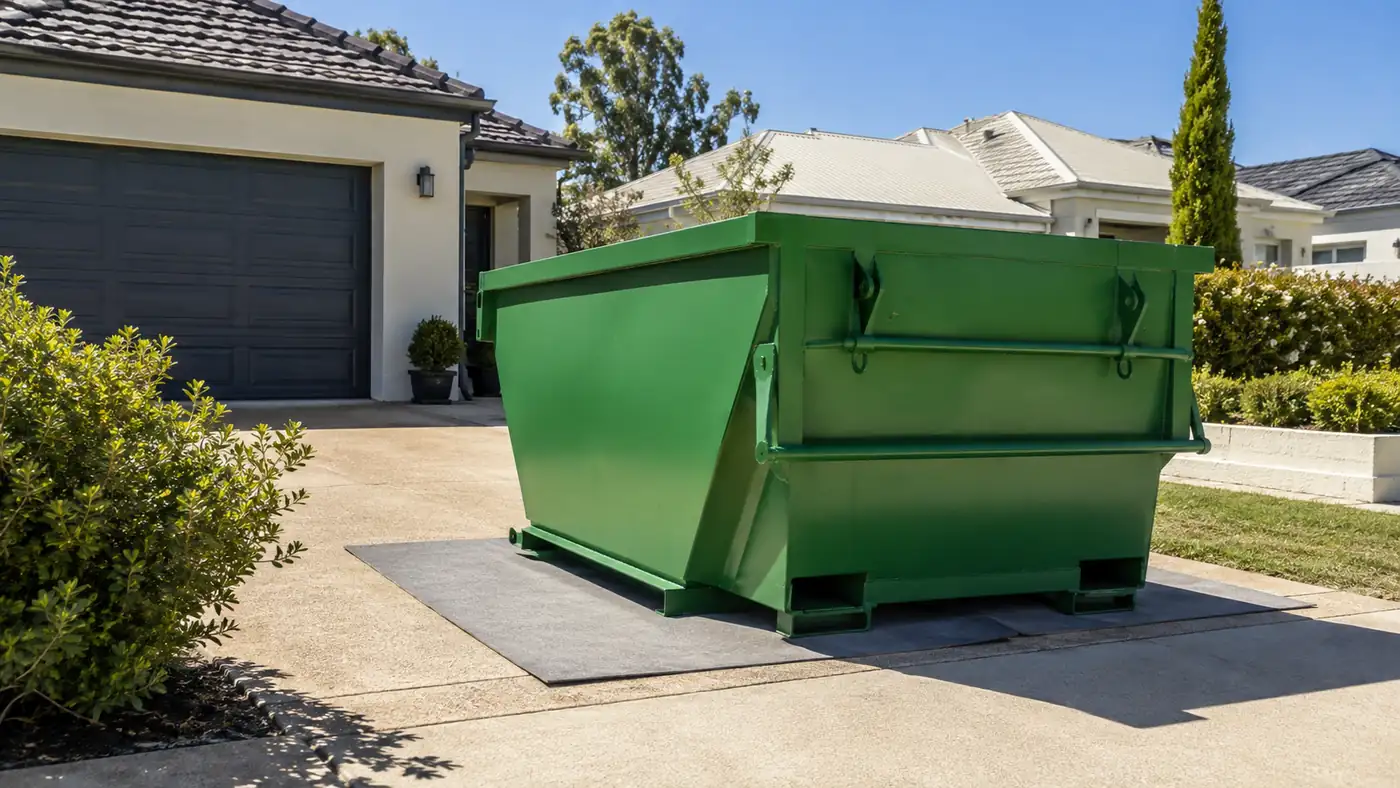
Avoid placing the bin over stormwater drains, utility covers, septic systems or other weak structures. Do not install loose timber, bricks, blocks or other makeshift supports without discussing the proposed surface protection with Backyard Bins first.
Heavy waste creates substantially more load on the ground. General Light Waste bins must not contain soil, sand, bricks, concrete, tiles, building rubble or turf. Check what can go in each skip bin category before loading.
What to do before the truck arrives
Complete this final check on the day before delivery:
- Confirm the preferred placement point and a safe backup position.
- Check that the ground is still firm and accessible.
- Move vehicles, trailers, building materials and temporary obstructions.
- Clear toys, hoses, pot plants, garden equipment and wheelie bins.
- Open gates or arrange access.
- Recheck branches, wires, carports and other overhead structures.
- Tell workers, tenants or residents when delivery is expected.
- Keep children and pets away while the truck is onsite.
Make the position unambiguous: explain where the bin should sit, which way it should face and what access must remain open. A clear photo or marked position can help when the site is difficult to describe.
You may not need to be home when access is open and the instructions have been confirmed. It is better to be present when several positions are possible, access is tight or the driver may need approval to use a safer alternative.
FAQs about preparing for skip bin delivery
How much space is needed for skip bin delivery?
A driveway around 3 metres wide is generally needed when the truck must reverse straight down it, but the actual clearance also depends on the truck, bin, turning area, slope and overhead space. Discuss narrow or difficult access before booking.
Can a skip bin be placed on grass?
It may be possible when the ground is firm, stable, reasonably level and accessible. Wet, soft, sandy or recently landscaped ground may not be suitable, particularly when reticulation or underground services are present.
Do I need to be home for delivery?
Not always. Confirm this with Backyard Bins and provide clear access and placement instructions. Being present is recommended when access is tight or the driver may need approval for a different location.
How should I prepare my driveway?
Choose a firm, reasonably level section and check for cracks, weak edges, loose paving, drains and overhead hazards. Report damaged, soft or newly installed surfaces before delivery.
What happens if the truck cannot reach the requested position?
The driver may suggest a safer accessible location. Common problems include parked vehicles, narrow entrances, steep sections, soft ground, low wires and insufficient positioning room.
Do I need permission to place a skip bin on the road?
Council permission and placement conditions generally apply when a bin is placed on a road, verge, footpath or other public land. Check the current local requirements before delivery.
Book your skip bin delivery
Backyard Bins services most suburbs south of the river. Tell Rydall and the team about narrow access, slopes, overhead hazards or surface concerns when booking so the delivery can be planned properly.

Rydall Seale
“ [rcblock id="4066"]”